Carbon Neutral Vision 2050
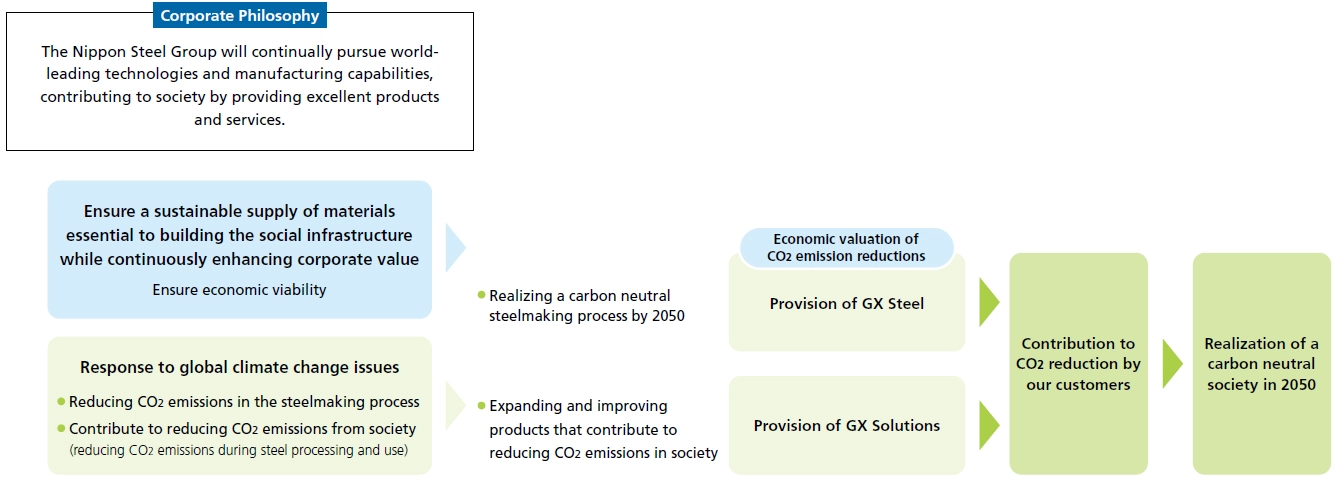
Nippon Steel aims to achieve CO2 reductions in its supply chain by offering two values: "providing high-performance steel products and solutions that contribute to reducing CO2 emissions throughout the entire society" and "providing GX Steel* by decarbonizing the steel making process" through the realization of the "Nippon Steel Carbon Neutral Vision 2050."
- * This refers to the "green steel for green transformation" defined in a summary of the Study Group on Green Steel for Green Transformation (GX) hosted by the Ministry of Economy, Trade and Industry (METI) in January 2025.
- Nippon Steel Green Transformation Initiatives Briefing (May.14,2026)
- Nippon Steel Green Transformation Initiatives Briefing (Mar. 13, 2025)
- Nippon Steel Carbon Neutral Vision 2050 (Mar. 30, 2021)
You can watch videos of our initiative toward the realization of a carbon-neutral society from here.
30 seconds
[Short version] 30 seconds
About 6.5 minutes
[Long version] About 6.5 minutes
Nippon Steel's Mission in Addressing Climate Change Issues
In support of the ambitious government policy to realize a carbon neutral society in 2050, we announced the Carbon Neutral Vision 2050 in March 2021.
We will satisfy the decarbonization needs of our customers (totaling approximately 6,000 companies in Japan) and support their international competition by taking the lead in decarbonizing the steel making process ahead of other countries, offering high-performance steel products and solutions, and swiftly supplying GX Steel to the market.
Toward the Decarbonizing of Steelmaking Process
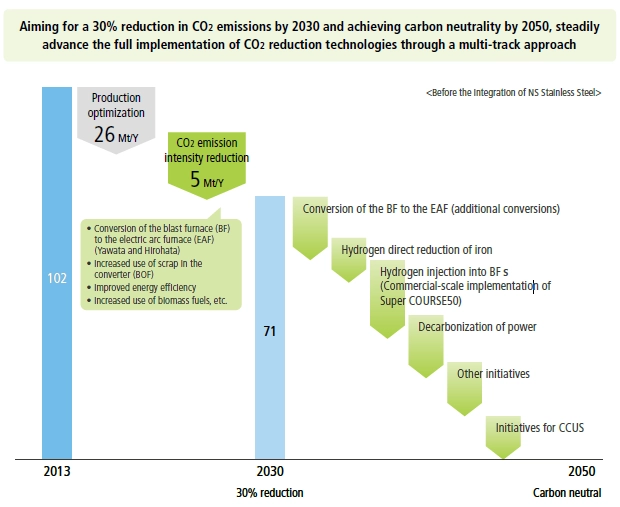
Nippon Steel have formulated a target of reducing total CO2 emissions by 30% by 2030, compared to the 2013 baseline and of achieving carbon neutrality in 2050. We are working to develop and actually implement innovative technologies in steelmaking process ahead of steel companies in other countries.
Our plan is ambitious compared to those of our global peers, and is intended to significantly contribute to the Japanese government's plan. With the assistance of the Green Innovation (GI) Fund*, we are working on specific plans for the roadmap of development and practical implementation.
- *This is an R&D project commissioned and subsidized by the New Energy and Industrial Technology Development Organization (NEDO), to support companies and other entities implementing projects that aim to achieve the ambitious 2030 targets (such as CO2 emission reductions) in priority areas of the Green Growth Strategy Action Plan.
Nippon Steel's Initiatives for Realization of a Carbon Neutral Society
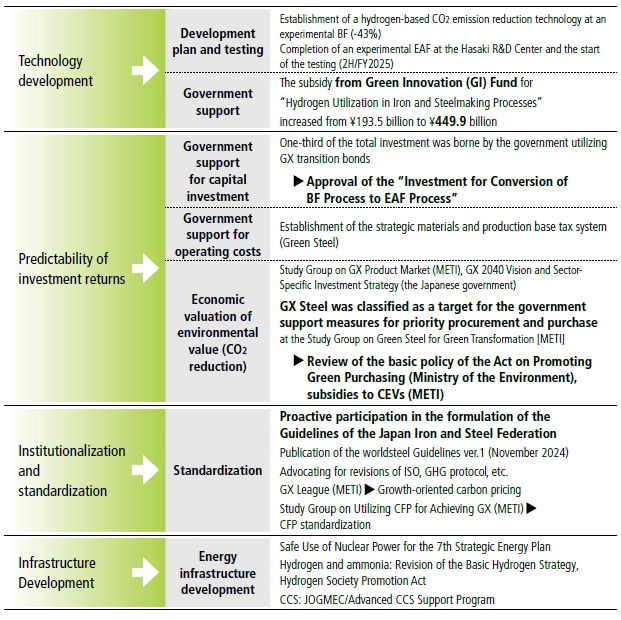
Achieving carbon neutrality requires a multi-track approach to the development and implementation of innovative technologies aimed at decarbonizing the steelmaking process, as well as efforts in securing decarbonized energy and raw materials. In addition, this initiative requires creating a GX market to supply GX Steel to society by establishing rules for CO2 reduction value that assess the predictability of investment returns, by promoting the adoption of GX Steel embedded with the CO2 reduction value, and by ensuring the predictability of investment returns.
We are steadily addressing these tasks by developing innovative technologies. We are also engaging the entire society in improving its awareness, with a primary focus on policy and institutional proposals to the government and industry.
Decarbonizing the steel making process
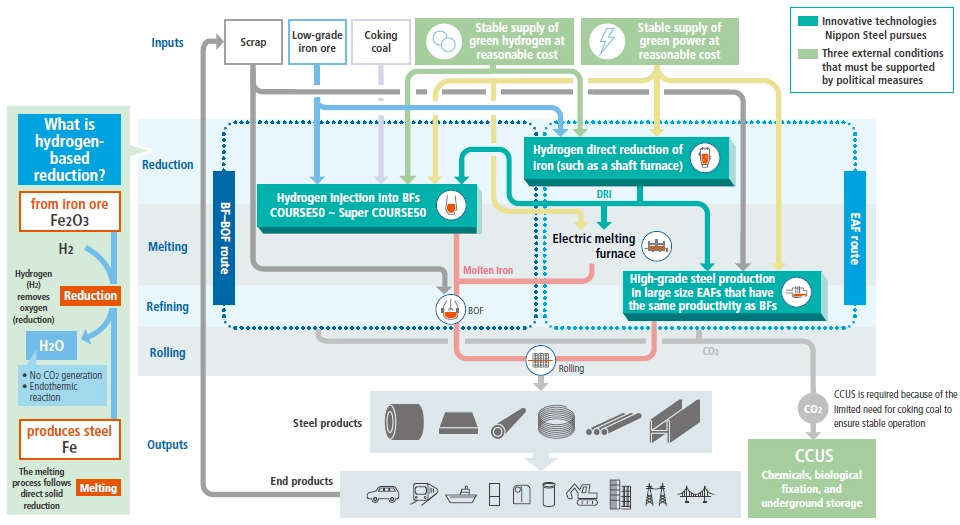
In the current BF–BOF process, coal (or coke) is utilized as a reducing agent and a heat source. At the same time, it remains in a solid form even at high temperatures in the BF, maintaining ventilation while supporting raw materials. Despite these advantages, this process inevitably generates CO2 during the reduction reaction.
For this reason, we will strive to achieve carbon neutrality by drastically reviewing our existing processes and engaging in the development and commercial-scale implementation of three innovative technologies via a multi-track approach. The three technologies are high-grade steel production in large size electric arc furnaces (EAFs) (through productivity improvement of EAFs and the manufacture of high-grade steel that cannot be made from direct reduced iron (DRI) and steel scrap), hydrogen direct reduction of iron (manufacturing solid reduced iron by hydrogen reduction in direct reduction furnaces (DRFs)), and hydrogen injection into BFs (injecting hydrogen into the existing BFs to partially replace the use of carbon).
Progress of Carbon Neutral Vision 2050
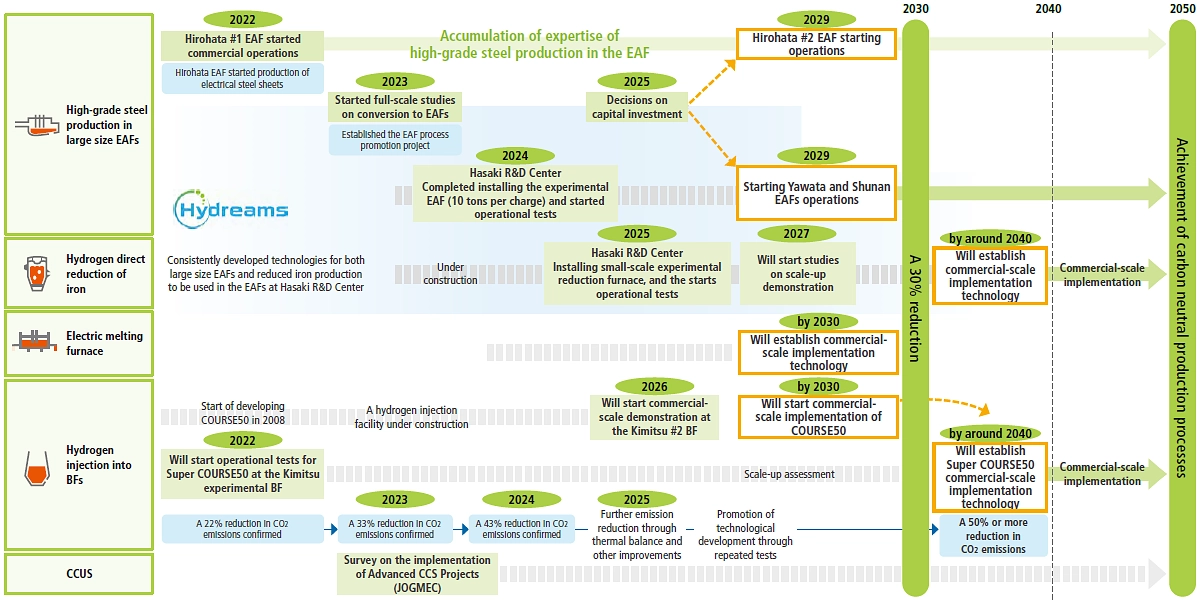
Following the roadmap below, Nippon Steel is driving R&D, demonstration tests, and feasibility studies on commercial-scale implementation related to the three innovative technologies identified in the Carbon Neutral Vision 2050: high-grade steel production in large size EAFs, hydrogen direct reduction of iron, and hydrogen injection into BFs. In FY2024, we also made steady progress, including the completion of an experimental EAF and the start of operational tests at Hasaki R&D Center of R&D Laboratories (Kamisu, Ibaraki), as well as the achievement of a 43% reduction in CO2 emissions at the Super COURSE50 experimental BF in the East Nippon Works Kimitsu Area.
In May 2025, we also made decisions on capital investments, including the conversion of a BF to an EAF in the Kyushu Works Yawata Area, the addition of #2 EAF in the Setouchi Works Hirohata Area, and the restarting of the EAF in the Yamaguchi Works (Shunan).
Carbon neutral conversion of existing BFs
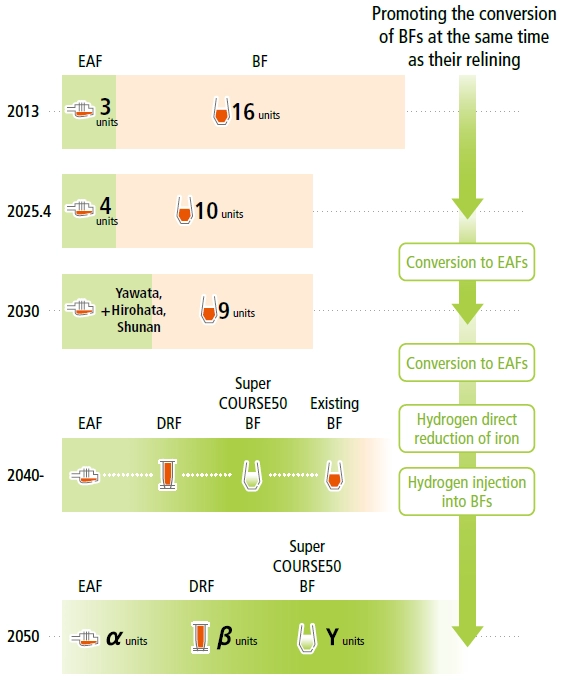
In the Carbon Neutral Vision, we will strive to achieve a carbon neutral production process no later than 2050 by converting our existing domestic BFs to the EAF process, or through optimum combinations of CO2 reduction technologies, such as hydrogen direct reduction of iron and hydrogen injection into BFs.
From now up to 2030, our primary option is the conversion of BFs to EAFs. From 2030 to 2050, we will fully implement GX technologies for iron ore reduction (hydrogen injection into BFs and hydrogen direct reduction of iron).
Carbon Neutral Vision 2050 TOPICS
Initiatives to High-Grade Steel Production in Large size EAFs
Decision has been made to invest in process conversion from BFs to EAFs
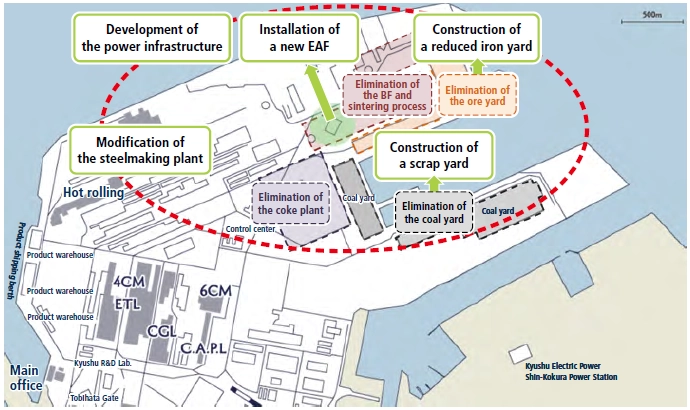
In May 2025, Nippon Steel decided to make a capital investment in the construction, expansion, and restarting of three EAFs in Japan by FY2029, involving the Kyushu Works Yawata Area, the Setouchi Works Hirohata Area, and the Yamaguchi Works (Shunan).
This investment totals ¥868.7 billion and encompasses ancillary and related facilities, including measures for high-grade steel production, logistics, power supply, and energy supply to downstream processes.
Thanks to these investments, the conversion of a total of approximately 2.9 million tons of production capacity per year to EAFs is expected to result in an estimated reduction of 3.7 million tons of CO2 emission per year. Accordingly, the supply of GX Steel with embedded CO2 reduction value is estimated to be approximately 1.6 million tons per year.
Development of technology for hydrogen direct reduction of iron
Starting operational tests at a scaled-up experimental shaft furnace
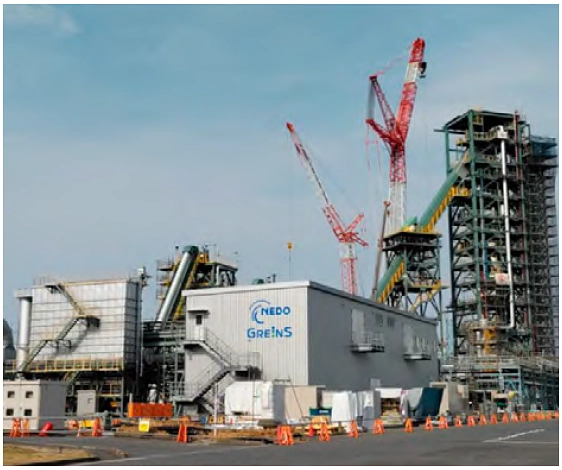
Toward establishing commercial-scale implementation of technology for hydrogen direct reduction of iron by around 2040, our R&D Laboratories are constructing a scale-up experimental shaft furnace (60 meters high) at the Hasaki Research and Development Center, whose operation tests are scheduled to begin in FY2025. This effort is based on the knowledge accumulated through bench tests conducted in the bench-scale shaft furnace at the Research and Engineering Center (Futtsu) since 2010.
Proceeding to Acquire Mining Interest in High-Grade Iron Ore Mine Suitable for Direct Reduced Iron Production
In June 2025, Nippon Steel signed an agreement to invest in a joint venture that will conduct an economic feasibility study on the development and operation of new mining areas in the Kami Mine in eastern Canada. The mine is expected to have an abundance of high-grade iron ore suitable for direct reduction of iron.
Initiatives for Commercial-scale Implementation of Hydrogen Injection into BFs
COURSE50 Project*1 Super COURSE50 Project*2
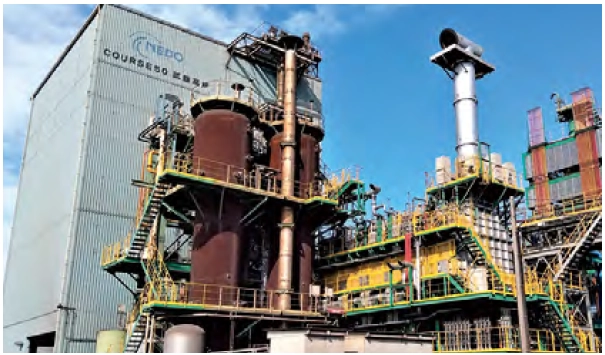
The COURSE50 is a technology development we undertook from 2008 to 2022 to realize steelmaking using hydrogen. At an experimental BF with a volume of 12m3 constructed in the East Japan Steel Works Kimitsu Area, we conducted operational tests on hydrogen injection into the BF using hydrogen-rich by-product gas (coke oven gas) generated within the steelworks, verified over a 10% reduction in CO2 emissions. We also developed an energy-saving CO2 separation and capture technology using a chemical absorption method, which led to its commercial-scale implementation in the industrial CO2 field.
The Super COURSE50 is a Green Innovation Fundsubsidized project that aims for a further reduction of CO2 emissions (50% or more). This is a technology for heating and using hydrogen purchased from external sources for maintaining the heat balance in the BF in anticipation of an era when social infrastructure for a sufficient hydrogen supply is available. Since the start of test in May 2022, we have steadily made progress, including the achievement of a 43% reduction in CO2 emissions from the BF during operational tests conducted in November to December 2024. This achievement sets a new world record.
- *1A project commissioned by the New Energy and Industrial Technology Development Organization (NEDO)
- *2An R&D project commissioned and subsidized by NEDO: Green Innovation Fund Project/ Hydrogen Utilization Project in Iron and Steelmaking Processes
Initiatives for GX Steel Market Creation
Costs of achieving carbon neutrality
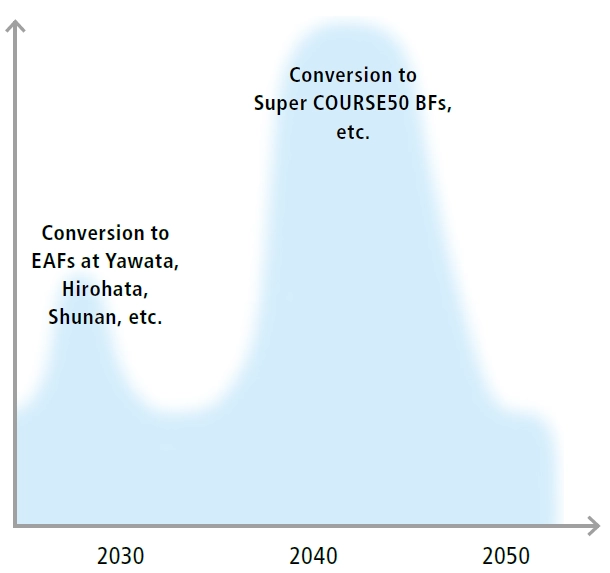
The development and commercial-scale implementation of innovative technologies to realize carbon neutral steel production processes require significant R&D expenses and capital investment. At this point, we estimate that achieving carbon neutrality in our steel production processes would require over ¥500 billion in research and development expenses by 2050. In addition, we anticipate requiring capital investment for commercial-scale equipment that exceeds the initially projected ¥4 trillion to ¥5 trillion, depending on future increases in material and labor costs, as well as the specific methods for implementing innovative technologies.
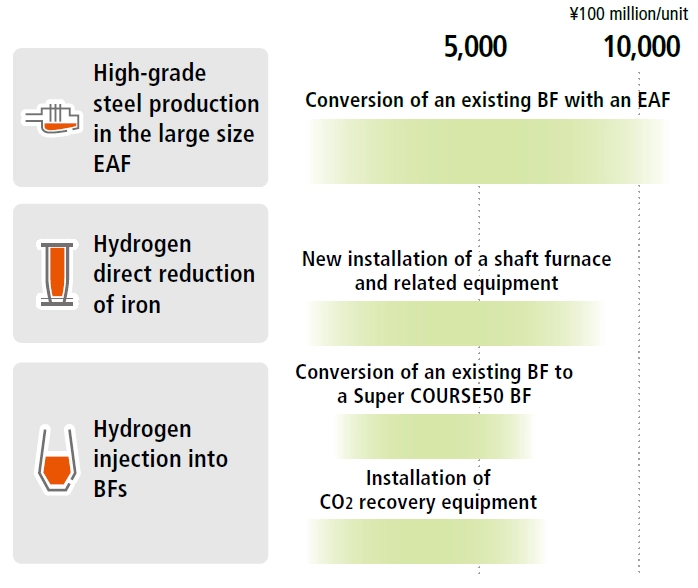
We are committed to engaging in R&D for commercial-scale implementation, supported by the government with the Green Innovation Fund. We are also making steady progress in technology development to minimize cost increases to the extent possible.
However, the operating cost of GX Steel production will increase significantly due to the need for higher-grade raw materials compared to the conventional process, as well as the requirement to procure electricity to replace recycled energy sources, such as by-product gases.
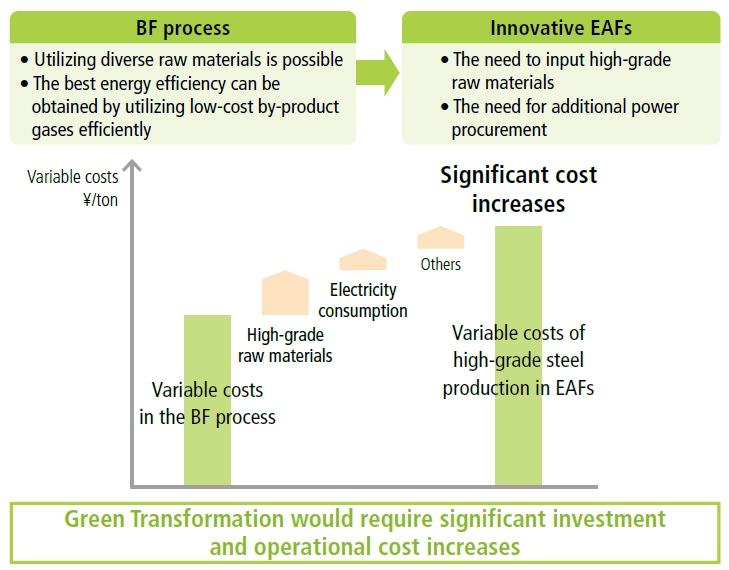
Therefore, we will make investment decisions on capital investment for commercial-scale facilities after assessing these cost increases and ensuring the predictability of investment returns based on the aforementioned policy support and the progress in the economic valuation of CO2 reduction value in the GX Steel market.
Support for increasing capital investment and operating costs
In other countries, government support systems have been established not only for R&D expenses aimed at achieving carbon neutrality but also for covering increasing capital investment in commercial-scale equipment and operating costs. From the standpoint of equal footing in international competition, such a support system is desired in Japan as well.
To establish such a support system, we are actively advocating government agencies for support by submitting proposals and through other approaches. As a result, the Japanese government has already launched investment promotion measures utilizing GX economy transition bonds, as well as tax credit measures corresponding to the production volume in each strategic sector. These measures support technologies that effectively and efficiently reduce CO2 emissions, particularly those that are highly effective in strengthening our industrial competitiveness and economic growth.
This business investment in process conversion from BFs to EFs we decided in May 2025 is adopted in the "Energy and Manufacturing Process Transformation Support Business (Business I (Steel)) FY2025–2029 Project" under the GX Promotion Act.
We will continue to make efforts to secure such support measures and ensure the predictability of investment returns.
Establishing the predictability of GX investment returns
Establishing the predictability of GX investment recovery requires not only the aforementioned "government support for capital investment in commercial-scale equipment for carbon neutrality"but also "creating a sound GX Steel market where the price of CO2 reduction value is paid."
In the GX2040 Vision, approved by the Cabinet in February 2025, the creation of this GX product market was positioned as a key initiative for achieving Green Transformation (GX). The measures included in the Vision are (a) promoting active public procurement of green steel and studying the strategies for its active utilization in public works under the Act on Promoting Green Purchasing, (b) promoting procurement by private companies by utilizing the "GX Leading Execution Declaration" of the GX League, (c) the materialization of demand-side support measures to promote the use of GX Steel in automobiles, and (d) establishment of a calculation and assessment system for the lifecycle carbon emissions of buildings.
Furthermore, in addition to carbon pricing, the government has stated its policy to introduce regulatory measures under its "Sector-specific Investment Strategies," and the implementation or consideration of these measures has started.
Activities for GX Steel market creation
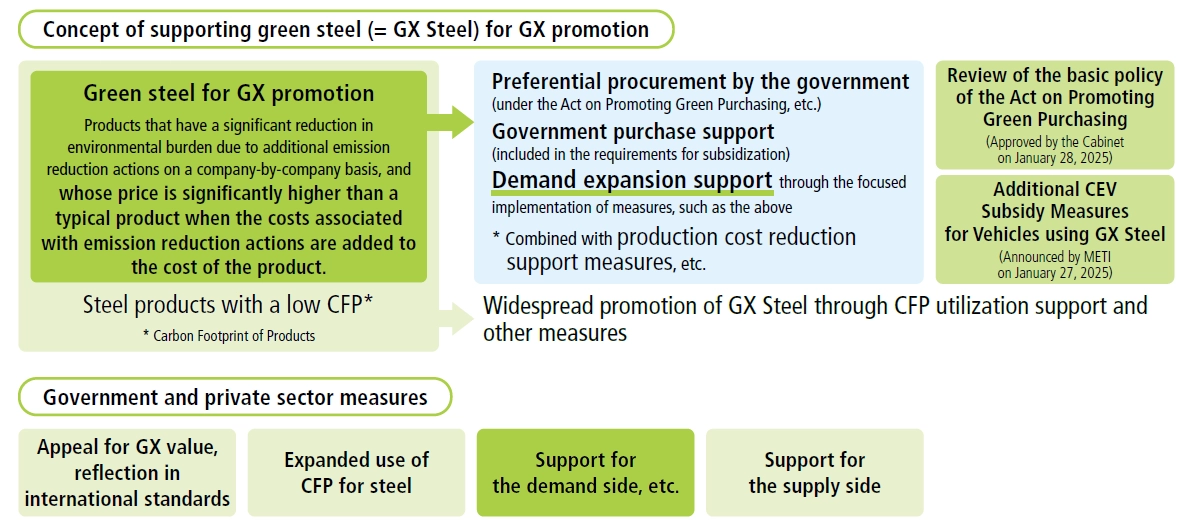
To recover GX investments, it is necessary to raise the price of GX Steel to a level commensurate with its CO2 reduction value. To make it happen, we must establish an environment where the costs required for CO2 reduction are evaluated and borne as a CO2 reduction value in the entire value chain, and ultimately across the entire society.
On the other hand, our customers need to visualize the CO2 reduction value embedded in GX Steel and ensure it is reflected in the environmental value of the products they manufacture from this material.
Furthermore, since GX Steel's functional properties as a steel product are the same as conventional steel, it is essential to devise incentive mechanisms powerful enough to convince customers to purchase GX Steel during the period when the customers use both GX Steel and conventional steel at the same time.
Given the circumstances, with "Green Steel for GX Promotion = GX Steel" defined at the "Study Group on Green Steel for Green Transformation" hosted by the METI, the government has begun implementing various measures, such as revising the basic policy of the Act on Promoting Green Purchasing and introducing subsidies for clean energy vehicles (CEVs) using GX Steel, as part of its priority procurement and purchase support for GX Steel.
Nippon Steel will continue to promote the widespread adoption and expansion of products utilizing GX Steel and implement initiatives to encourage the adoption of GX Steel in public works.
Activities to create a GX Steel market for the economic valuation of environmental value (CO2 reduction)
Nippon Steel participated in the "Study Group on Green Steel for Green Transformation," hosted by the METI from October 2024 to January 2025, to promote GX in the steel industry. Other participants included experts and representatives from the steel industry and end-user industries. The Study Group discussed how to link the expansion of the green iron market to GX promotion, organizing challenges for market expansion, as well as the way we communicate with consumers. As a result, the Study Group proposed comprehensive public-private measures toward establishing a GX Steel market.