
Disaster Prevention
Basic Policy
Our manufacturing values place the highest priority on safety, environmental protection, and disaster prevention. In addition to advancing equipment measures for disaster prevention, we are committed to achieving zero serious accidents by taking proactive steps to mitigate potential risks and by ensuring swift and appropriate initial responses in the event of an emergency.
Furthermore, through continuous enhancement of both equipment-based countermeasures and training for natural disaster preparedness across the entire Group, we aim to ensure safe, secure, and stable production activities.
| Serious disaster-related accidents | 0 |
|---|
- Fatal accidents or accidents that caused impacts on production monthly
Organization for Disaster Prevention
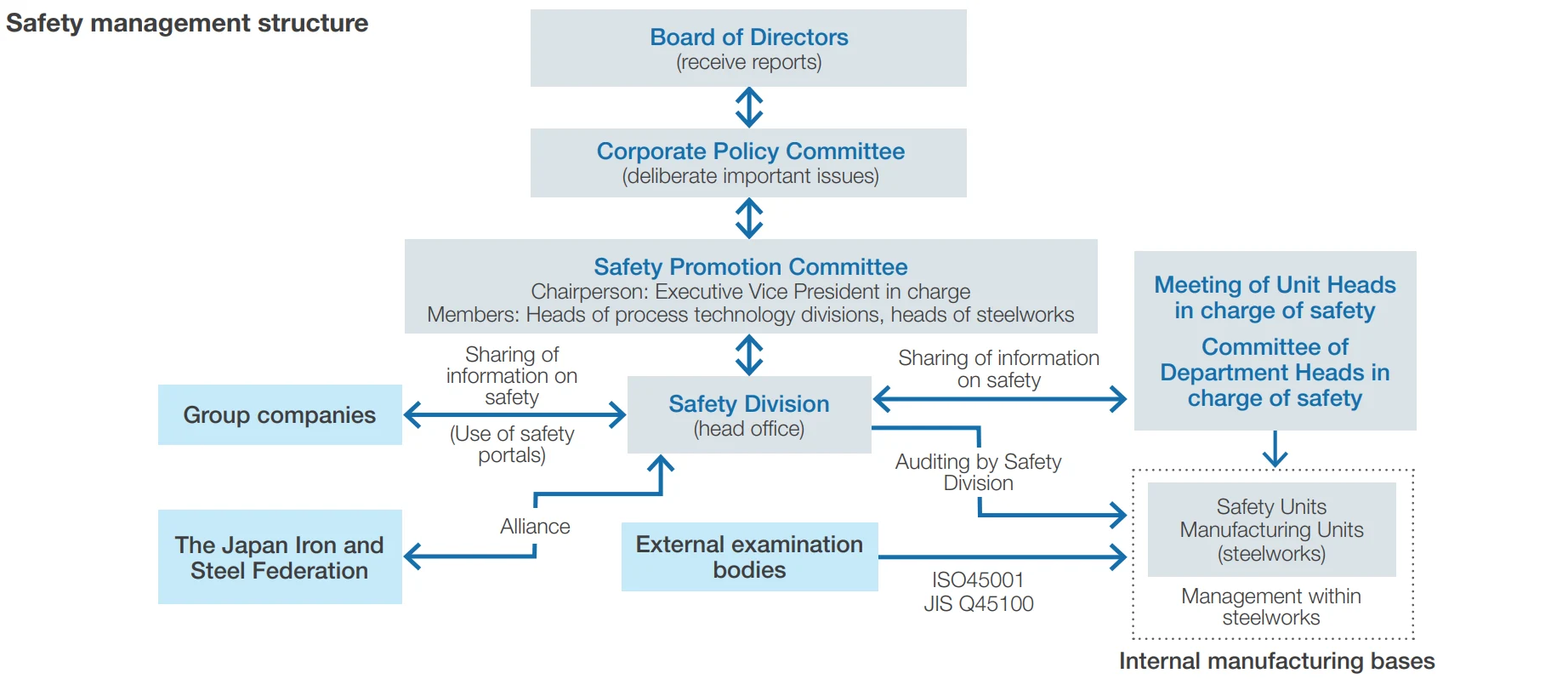
Target and KPI
- Elimination of disaster risks and group-wide sharing of effective measures
-
- Zero serious disaster-related accident
Disaster risk reduction activities
(three-tiered defense approach)]
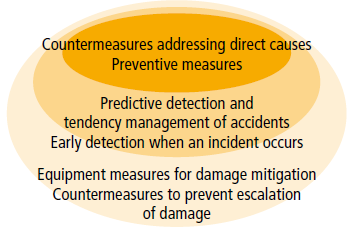
Our disaster prevention initiatives focus on: 1) Ensuring compliance with disaster prevention laws and regulations, and conducting risk assessment activities to prevent accidents. 2) Implementing measures to thoroughly prevent recurrence of incidents and ensuring appropriate on-site initial responses to mitigate damages when an incident occurs. 3) Regularly monitoring the execution of disaster prevention management activities.
Through these efforts, we remain committed to establishing autonomous disaster prevention activities, driven primarily by the manufacturing sites at each steelworks.
Specific disaster prevention initiatives
1 Compliance with disaster prevention laws and regulations
- Development of frameworks based on disaster prevention laws and regulations, and execution of appropriate fire protection measures
- Inspection and maintenance of equipment for disaster prevention to ensure effectiveness in the event of an emergency
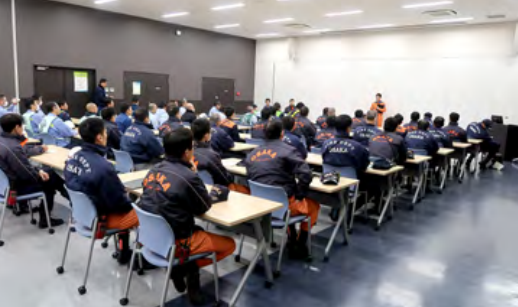
2 Disaster prevention risk assessment (Measures to mitigate existing risks and preventive actions against potential risks)
- Identification and assessment of risks, management of residual risks, and formulation of permanent countermeasures at manufacturing sites, in line with company-wide guidelines, through risk assessment as a preventive approach
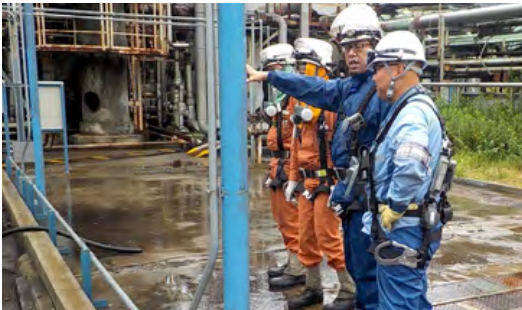
3 Recurrence prevention measures
- Equipment measures based on the three-tiered defense approach (recurrence prevention, predictive detection of precursors and tendency management, and mitigation measures in the event of occurrence
4 Enhancement of initial response
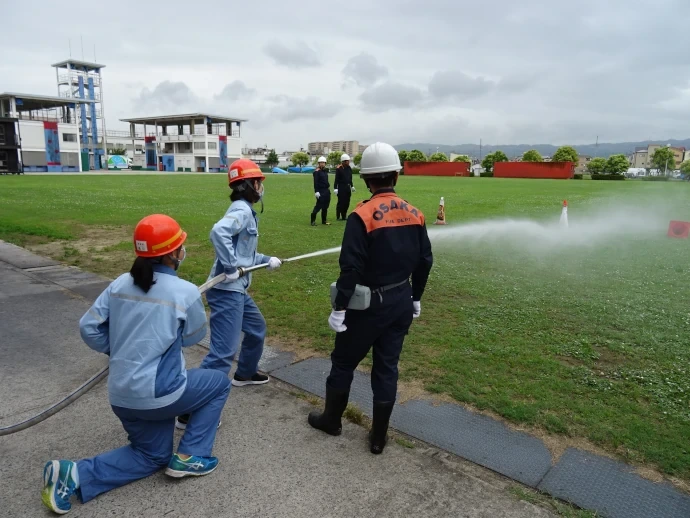
- Verification of initial response procedures through practical training simulating disasters (Systematic implementation of practical training at each workplace across all plants: training simulating nighttime and holiday scenarios, training simulating work at heights, joint training including Group companies and others)
- Enhancement of firefighting skills of in-house fire defense function in cooperation with fire departments (Joint training with fire departments, leader education programs and others)
5 Preparedness measures for earthquakes and tsunami and measures for natural disaster mitigation
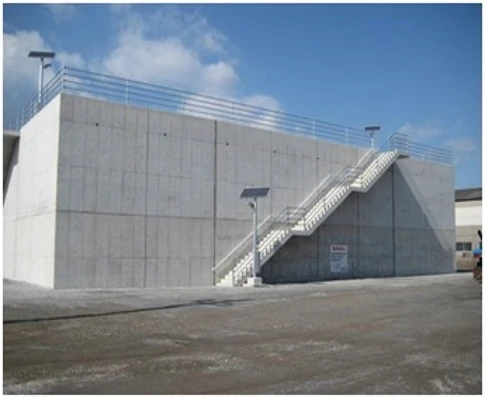
- Promotion of measures in preparation for earthquakes: 1) human injury prevention, 2) area damage prevention, and 3) production maintenance.
- Preparation of emergency measures and evacuation procedures, as well as training drills, to mitigate damage in the event of natural disasters. (Example) Review of assumptions for the Nankai Trough Earthquake Comprehensive inspection of initial response to Tsunami warnings and advisories (July 2025)
6 Auditing disaster prevention
- Factory monitoring by the disaster prevention organization at each steelworks for verification on the status of disaster prevention activities at the manufacturing work front.
- Check-up on the implementation status of disaster prevention management of all steelworks by the disaster prevention department at the head office.
7 Third-party monitoring toward enhancing safety competency in steelworks
- Assessment of steelworks by an NPO, Japan Industrial Safety Competency Center.(Nonprofit Organization: Japan Industrial Safety Competency Center)
8 Disaster prevention management for group companies
- Holding of regular information-sharing meetings to enhance coordination for disaster prevention management. Individual audits of Group companies that have risks related to disaster prevention.