
Management of discharged chemical substances
Comprehensive management of discharge
Nippon Steel appropriately manages and tries to improve the production, handling, and discharge or disposal of chemical substances in accordance with PRTR Law*1, CSCL*2, and other laws concerning the management of chemical substances as well as the procedures employed.
According to PRTR Law, we thoroughly manage the material balance of subject chemical substances, which includes the amount handled, the amount discharged into the environment, the amount disposed, and the amount used as products. In complying with CSCL, we identify and provide notification of the amounts of production and sales of the targeted chemical substances.
Nippon Steel also takes the lead in promoting use of alternatives to using steelmaking materials and equipment that contain hazardous materials such as polychlorinated biphenyl (PCB) and mercury. According to safe handling standards, we systematically replace or dispose of possibly hazardous parts and materials, given the time limit for disposal or the expiration date, stipulated for each area.
Management of discharge based on the Chemical Substance Management Law
In 1999, two years before the enforcement of PRTR Law, Nippon Steel began surveying chemical substances according to the voluntary control manual developed by the Japan Iron and Steel Federation (JISF). At present, in accordance with PRTR Law, we monitor the 515 chemical substances, which have revised by the law, and try to control their discharges and improve the way we manage it. We properly submitted reports in fiscal 2024 in accordance with the revised PRTR Law that came into effect on April 1, 2023.
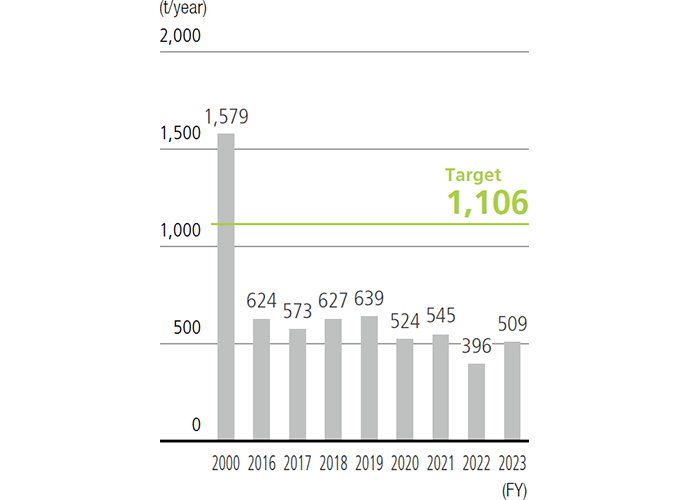
We also manage and reduce volatile organic compounds (VOCs*3), which are considered the cause of photochemical oxidants and airborne particles. We achieved our target of a 30% reduction compared to FY2000 levels in FY2009 and have since maintained emissions at a low level.
- Reports in accordance with PRTR Law (FY2024)
Reported substances: 59
Emissions/discharges: 323t/year (air), 22t/year (public water bodies)
Waste transferred off-site: total19,953t/year*
* The majority consists of metals such as manganese and chromium, as well as silicon carbide used in bricks and grinding wheels.
Voluntary emissions management
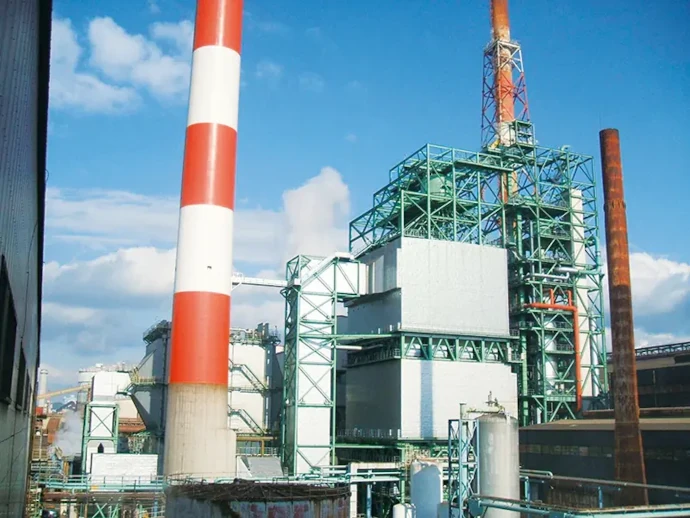
(Kansai Works Wakayama Area)
- Dioxin
Some of our facilities, such as sintering facilities and incineration facilities, are a source of emissions of dioxins into the atmosphere. All these facilities have conformed to the emission concentration standard and have achieved levels of emissions far below the voluntary reduction target, based on the JISF guidelines, relative to fiscal 1997.
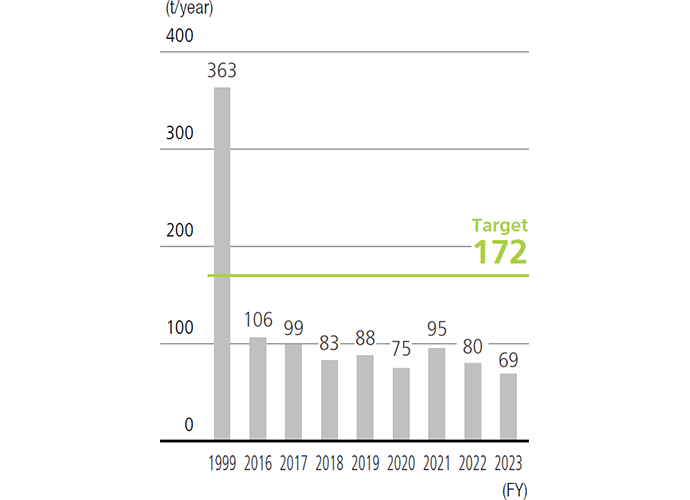
- Benzene, tetrachloroethylene, dichloromethane
We developed a voluntary reduction plan of hazardous air pollutants specified in the environmental standard, which we handle. As a result of our systematic undertaking, we have already reached the targets for all three pollutants and have been maintaining the target levels.
- *1An abbreviation of the Act on Confirmation, etc. of Release Amounts of Specific Chemical Substances in the Environment and Promotion of Improvements to the Management Thereof (Law concerning Pollutant Release and Transfer Register/PRTR)
- *2An abbreviation of the Act on the Evaluation of Chemical Substances and Regulation of Their Manufacture, etc.
- *3Volatile organic compounds (VOC): Organic chemical compounds emitted into the atmosphere in the form of gases, which are considered to be the source of undesirable airborne particles and photochemical oxidants, which became subject to control under the Air Pollution Control Act of 2004, as amended.