
Water risk management
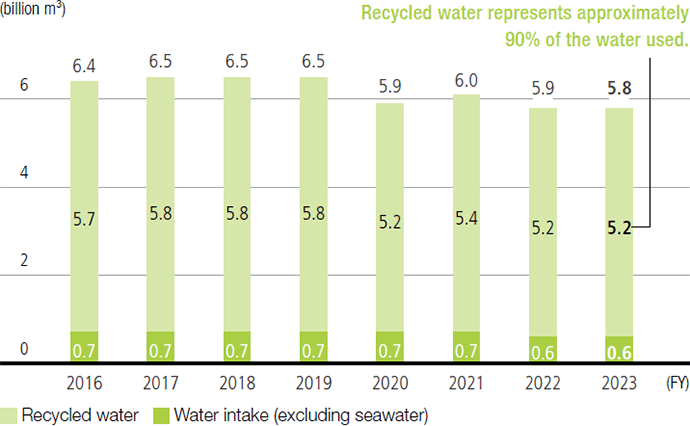
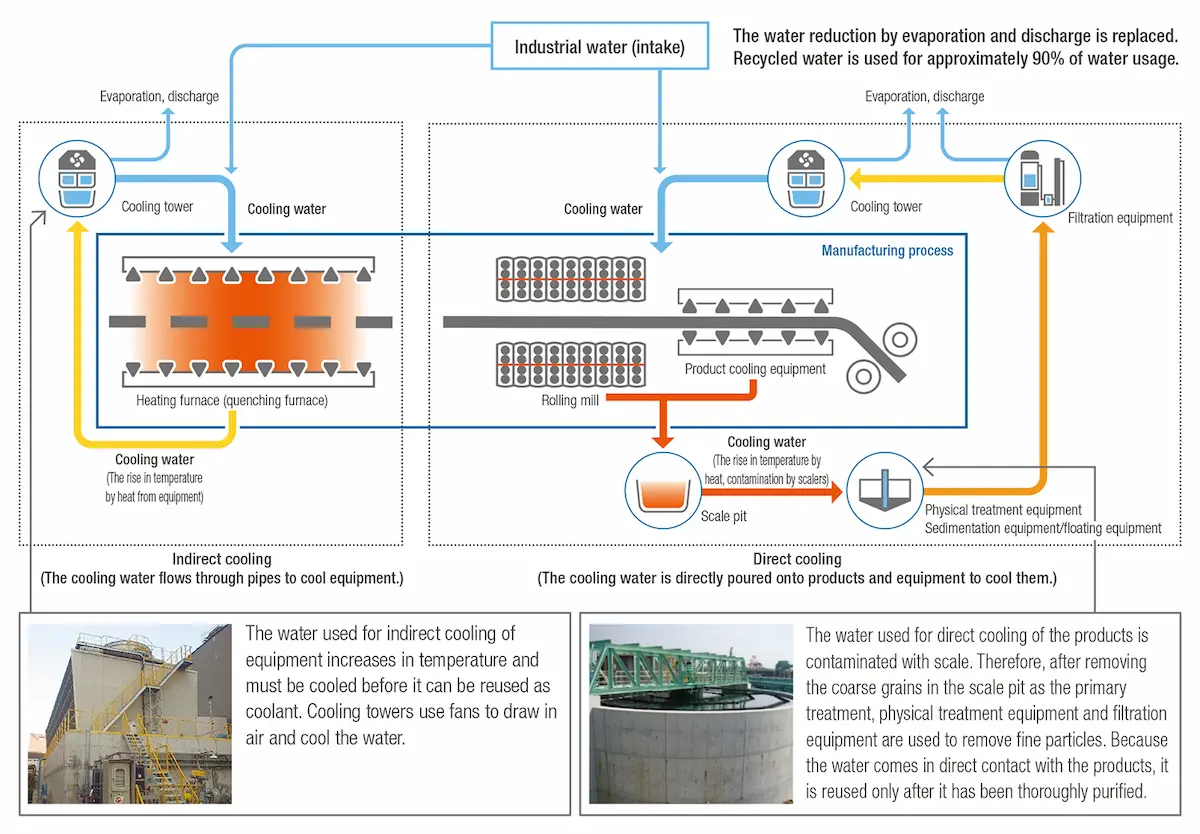
In addition to reducing water consumption in our business activities, we seek to make effective use of water resources and control wastewater by installing facilities such as water purification and cooling systems, while maintaining and improving their performance. As a result, approximately 90% of the industrial water used in all our steelworks is reused through recycling.
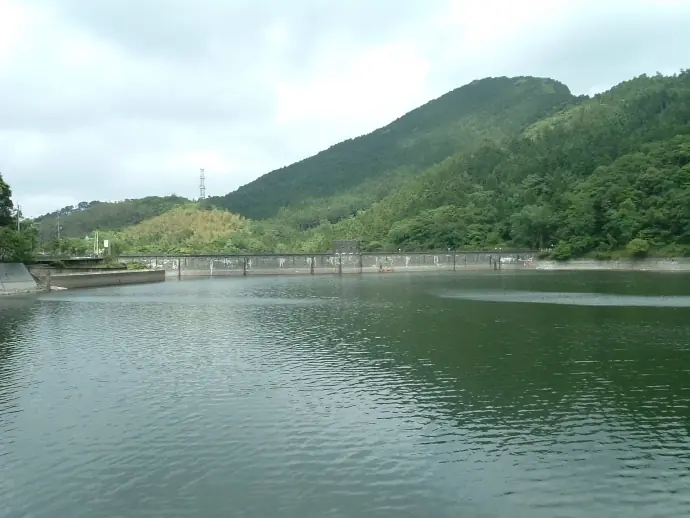
Although none of our domestic operational sites are classified as “high risk” under the WRI Aqueduct water stress assessment, some steelworks are equipped with dedicated reservoirs to prepare for potential water intake restrictions. When necessary, these reservoirs are also used to provide supplemental water for agricultural purposes, thereby helping to alleviate regional concerns about water.
In our ongoing nature-related risk and opportunity analysis, we evaluated 26 major overseas iron ore and coking coal suppliers by using tools such as IBAT (Integrated Biodiversity Assessment Tool) and Aqueduct, and identified 7 sites in regions with high impacts on “water resources” and “terrestrial ecosystems”. In the future, we will evaluate the identified impact and consider engaging with suppliers to reduce their impact on natural capital, including water resources.
| 2020 | 2021 | 2022 | 2023 | 2024 | ||
|---|---|---|---|---|---|---|
| Industrial water |
Rivers and lakes*1 | 0.7 | 0.6 | 0.6 | 0.6 | 0.6 |
| Groundwater*2 | 0 | 0 | 0 | 0 | 0 | |
| Water supply (city drinking water) | 0 | 0 | 0 | 0 | 0 | |
| Seawater | 2.0 | 2.0 | 1.8 | 1.8 | 1.9 | |
| Rainwater and other sources of water intake |
- | - | - | - | - | |
| Total | 2.6 | 2.6 | 2.5 | 2.4 | 2.5 | |
| 2020 | 2021 | 2022 | 2023 | 2024 | |
|---|---|---|---|---|---|
| Ocean*3, evaporation | 2.6 | 2.6 | 2.5 | 2.4 | 2.5 |
| Off-site water treatment*4 | 0 | 0 | 0 | 0 | 0 |
| Other uses, other discharges | - | - | - | - | - |
| Total | 2.6 | 2.6 | 2.5 | 2.4 | 2.5 |
- *1The amount of water taken from the company’s reservoirs is included in “Rivers and lakes (industrial water).”
- *2Some workplaces have taken water from groundwater, which is less than 0.3% of the total.
- *3Water discharge is treated appropriately according to water quality and discharged in compliance with water discharge standards.
- *4Other than the ocean, water treatment (sewerage) outside the site is less than 0.01% of the total.
Addressing water quality risks
To comply with the Water Pollution Prevention Act and to preserve the quality of the marine and other receiving environments, we conduct monitoring and control of wastewater quality. In addition, to prevent abnormal wastewater from being released outside our steelworks in the event of operational problems, we have installed automatic wastewater monitoring systems, containment dikes, shut-off gates, and emergency storage tanks. Furthermore, to address localized heavy rainfall, we have implemented a variety of flood control and leakage prevention measures, including large-scale storage tanks, embankments, and water barriers and impermeable sheets.
We also actively pursue “unmaterial” measures to maintain the effectiveness of these facilities, such as inspections and repairs, the development of standard operating procedures for handling abnormal wastewater, and training to verify functionality and reinforce operational procedures.
- Measures to prevent the reoccurrence of environmental incidents in the Kimitsu Area of the East Nippon Works
In the Kimitsu Area of the East Nippon Works, colored effluent containing coke gas desulfurization liquid flowed out from our sites in June 2022, and, between June 30 and July 2, the draining of effluent that exceeded the effluent standards was found to have occurred at Effluent Outlet No. 7. Furthermore, our subsequent internal investigations identified the draining of effluent that exceeded the regulatory values at other effluent outlets and drainage channels and our inappropriate treatment of water quality measurement results. We sincerely apologize for the significant concern and inconvenience to nearby residents, municipal authorities, and all other stakeholders caused by these incidents. We fully recognize the seriousness of this matter. We are thoroughly taking measures to ensure such incidents will not occur again, based on our investigation of causes and evaluation of countermeasures.
1. Concerning the incident of colored effluent outflow
In June 2022, desulfurizing liquid leaked from a repaired section of a tank that temporarily stores coke gas desulfurization liquid. The colored effluent overflowed above a dike surrounding that tank, inflowed into drainage systems via the rainwater collection side ditch and the underground passage and flowed out from our sites. The tank had undergone overhaul inspections and wall thickness measurements as well as daily and monthly inspection and it had been repaired accordingly, however, this could not prevent the leakage that occurred this time.
In response to this incident, we have decided to implement thorough countermeasures to prevent reoccurrence via a three-tiered approach: “no leaks,“ “no inflow into drainage systems even if a leak occurs,“ and “shutting-off of leaks within drainage systems.“ This involves not only renewal of the desulfurization liquid tanks, but also installation of dikes, and shutting off the drainage system, and other measures.
2. Concerning the draining of effluent exceeding the effluent standards via Effluent Outlet No. 7
In response to the colored effluent outflow incident, we conducted daily water quality measurement at all effluent outlets. As a result, between June 30 to July 2, we found that the effluent at Outlet No. 7 indicated measured values of cyanide and total nitrogen exceeding the effluent standards, which was attributable to the dust collection water for a blast furnace. Furthermore, during this investigation into the causes, we found effluent discharge had been conducted using methods different from those in the notification to the authorities, such as the redundant water generated in the dust collection system of the blast furnace being sent to a different drainage system utilizing a temporary pump. We also identified the existence of multiple temporary pumps and cyanide treatment facilities not described in the notification to the authorities. It can be inferred that the draining of effluent that exceeded the effluent standards at Effluent Outlet No. 7 described above occurred because one of these pumps fell off and pumped out redundant water while agitating and dispersing sludge with a high concentration of cyanide..
We have removed all the temporary pumps that were not notified to the administrative agencies. In addition, we are carrying out dual measures for cyanide treatment by reinforcing and renewing the treatment equipment in the dust collection system of the blast furnace.
3. Concerning the incident identified from voluntary thorough inspections
As a result of a voluntary comprehensive inspection that we conducted in response to the incident described above, we found that there were unreported cases of exceeding the effluent standards and the values agreed upon with municipal authorities at multiple effluent outlets and drainage channels. This included the cases where, in statutorily required measurements at Effluent Outlet No. 16, in cases where measurement results had exceeded the effluent standards for cyanide and total nitrogen, such measurement results were not reported to the administrative agencies concerned. Instead, additional sample collection was conducted, and the measurement results that fell within the effluent standards were recorded and stored as the statutorily required measurement results. Also, the cases we found included where, in measurements other than the statutorily required ones at Effluent Outlet No. 16, the draining of effluent exceeded the effluent standards for cyanide and total nitrogen, but had not been reported to the administrative agencies concerned.
Presently, we are implementing the same dual measures for cyanide treatment for this dust collection system of the blast furnace as described under heading 2 above, in addition to installing equipment to prevent water overflow.
4. Issues with mindset, issues with organizational/operational systems, and countermeasures to prevent reoccurrence
We consider that the causes of these incidents include mindset issues, such as misconceptions about statutorily required measurements and notifications under the Water Pollution Prevention Act, insufficient sharing of risks with supervisors and other departments, and insufficient dissemination of the awareness regarding environmental compliance among those involved in water treatment operations; and issues with organizational and business operation structures, including the structure related to blast furnace dust collection water treatment and business operations related to water quality measurement. Therefore, we are implementing the following measures to prevent the reoccurrence of these incidents.
- [Measures taken in the Kimitsu Area]
-
- 1Reorganize the organizational structure and establish divisions specializing in environmental and plant safety
- 2Strengthen environmental management within East Nippon Works
- Bring about a change in awareness that prioritizes legal compliance and preservation of the regional environment
- Elevate the priority of water quality control among senior management of East Nippon Works
- Enhance training of personnel in charge of water quality control
- Revise the roles of the division in charge of water quality measurement and subcontractors
- Restructure of water quality measurement workflow (fundamental overhaul of the workflow from sampling to measurement and data receipt, and establishment of a structure for reporting to administrative agencies concerned)
- Reinforce of internal audits
- Establish a system to prevent and check for inadequate notifications of facilities to the administrative agencies
- Transfer the responsibility for the quality management of dust collection water for blast furnaces to the operating department
- [Company-wide measures]
-
- 1Reorganize the organization within the headquarters, and establish the Environmental Technology and Management Division specializing in the management of environmental risks at the company-wide level
- 2Reinforce the company-wide environmental management function
- Restructure the Environmental Committee into the Environmental Technology and Management Committee, whose role is to review issues and measures related to water quality, air, and other environmental risks and the Environmental Planning Committee
- Reinforce and review of the content of environmental audits and internal factory audits
- Expand the implementation of managerial and other such measures undertaken in the Kimitsu Area to other works and areas, where necessary
For more information about this matter, please refer to the press release.
- Submission of the Report on the Effluent Incidents at Kimitsu Area of East Nippon Works (September 30, 2022)
Addressing water risks: Installation of liquid barriers
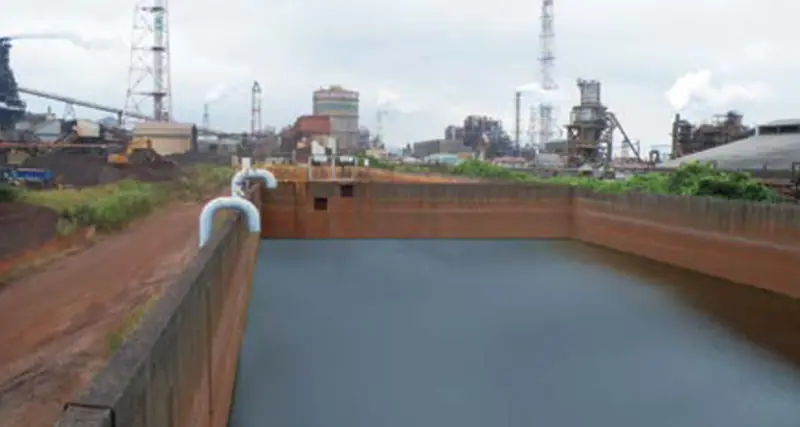
At our manufacturing sites, weirs (liquid-proofing barriers) are installed around storage tanks to prevent them from leaking out to the outside in the event of a chemical solution leaking.
While some storage tanks are legally obliged to install liquid barriers, depending on the size of the tank and the type of stored liquid, we have installed a liquid barrier that can accept 110% of the total capacity of a storage tank for all storage tanks that have a risk of leakage and causing environmental pollution, without being limited to legallymandated storage tanks.
Responding to water risks
Measures against local torrential rainfall
If large amounts of rainfall caused by local torrential rainfall due to abnormal weather conditions on the steelworks' vast grounds exceed the capacity of the wastewater treatment capacity, there is a risk that it will run off directly into the sea, etc.
In raw materials storage areas , there is a risk that powdered iron ore and coal will be caught in the rainwater and cause colored water to run off.
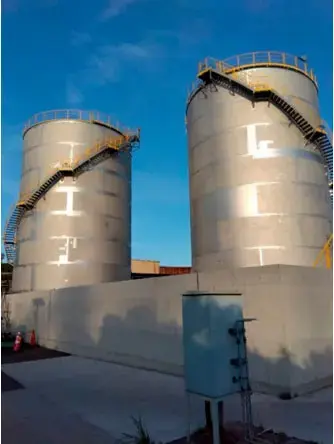
In response to this, we have identified risk areas within the steelworks and are taking measures to prevent abnormal wastewater even during localized heavy rainfall, such as installing large water tanks that can collect and store rainwater from those areas.
Measures against water leakage from embankment
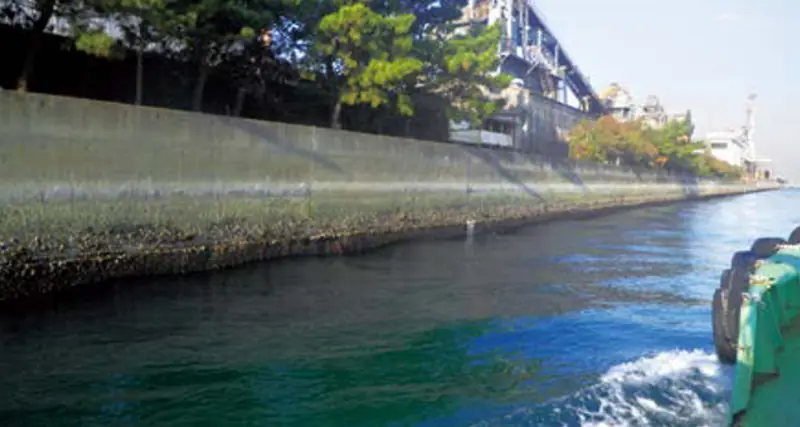
If there is a crack in an embankment facing the sea, there is a risk of a leakage of groundwater with unknown contaminants. In order to prevent this, the embankment is regularly inspected from the sea side enabling us to maintain and manage it in a sound condition. In areas with potential risk of leakage of water which may exceed permissible levels of contaminants, boards or a sheet water barrier may be installed so as to prevent leakage even if a crack develops on the embankment.
a system for recycling of industrial water in steelworks
Nippon Steel reclaims and reuses most of the water used in the steelmaking process, with a small remaining portion to be properly treated and discharged out of the steelworks. In the case of recycling, water is cooled and cleaned once it is used, and various treatments are carried out depending on the application. We therefore thoroughly inspect and maintain each processing facility and control the water quality in daily operations.
Environmental measures at steelworks
Measures for water purification
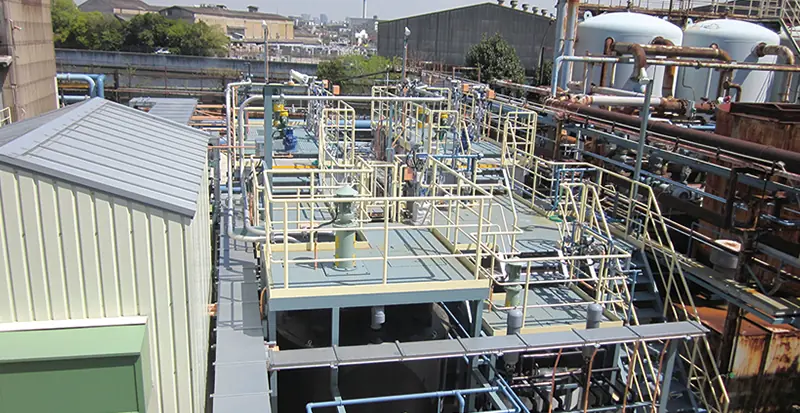
Fine undissolved matter is coagulated into bigger masses by chemical treatment, permitted to settle, and is removed.
Floating oil is removed by tiny bubbles formed by released air.
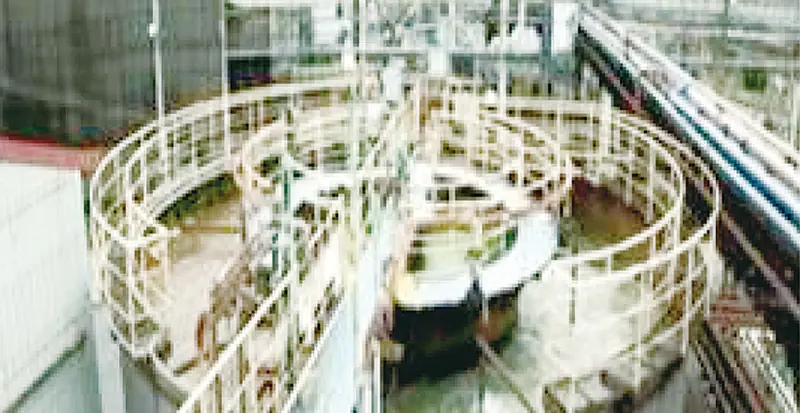
Organic matter is decomposed and eliminated by bacteria.
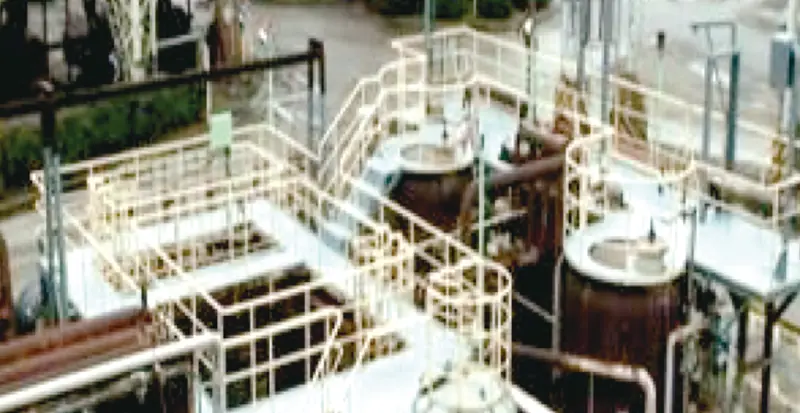
Undissolved residues in the treated waste water are filtered by a sand layer and removed.
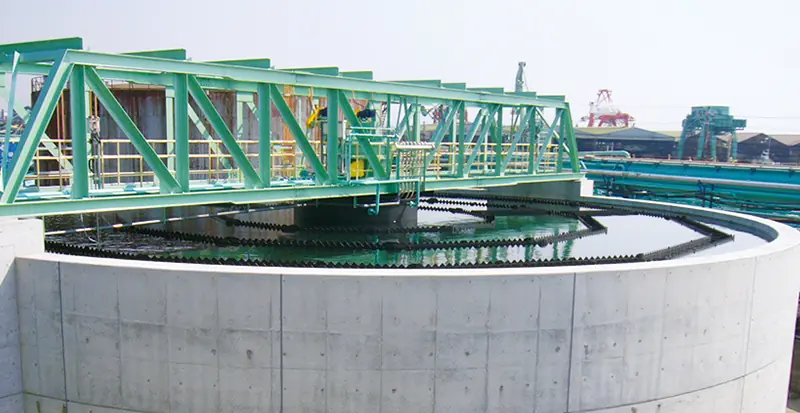
Undissolved residue from rainwater is coagulated and eliminated.
Measures for prevention of abnormal water discharge
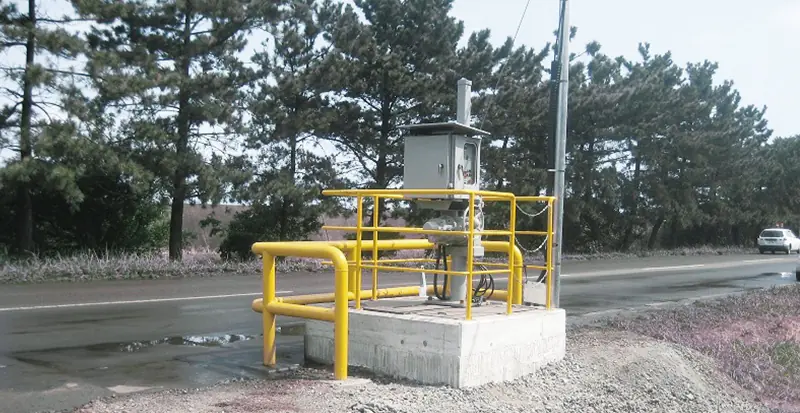
The water quality of waste water is automatically monitored.
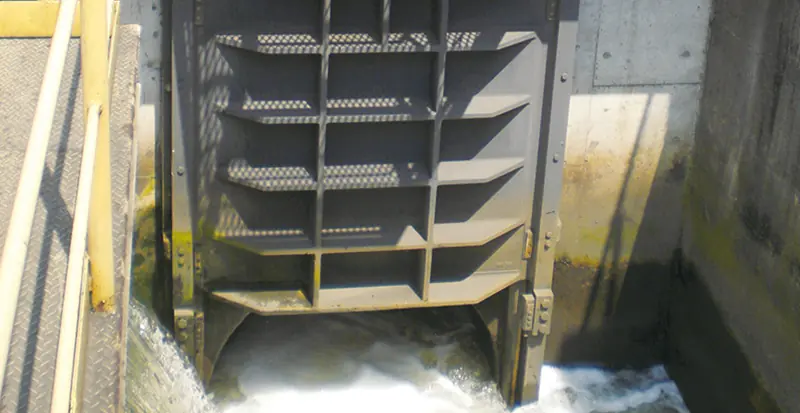
Waste water flow is shut in case of trouble.
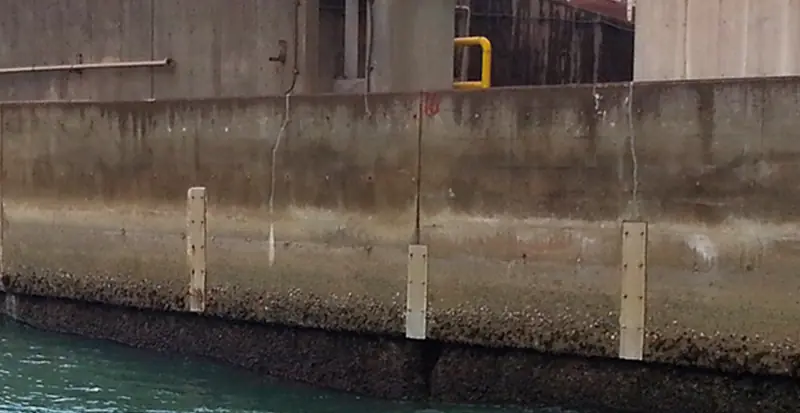
Damaged areas found by inspection are promptly repaired to maintain and manage the embankment in a sound condition.
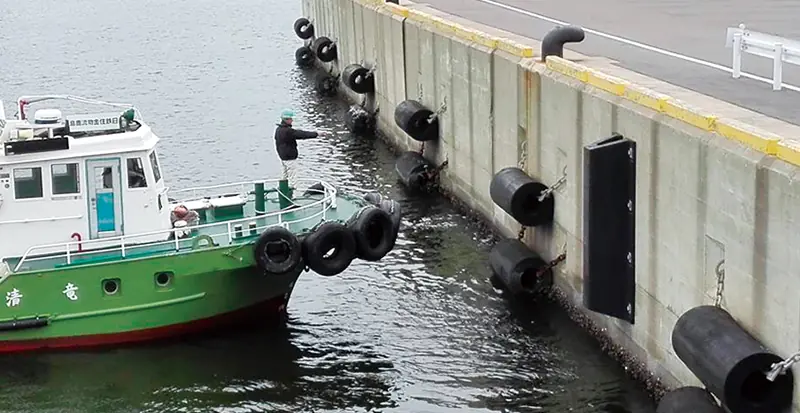
The embankments are regularly inspected from the sea side to find potential issues.